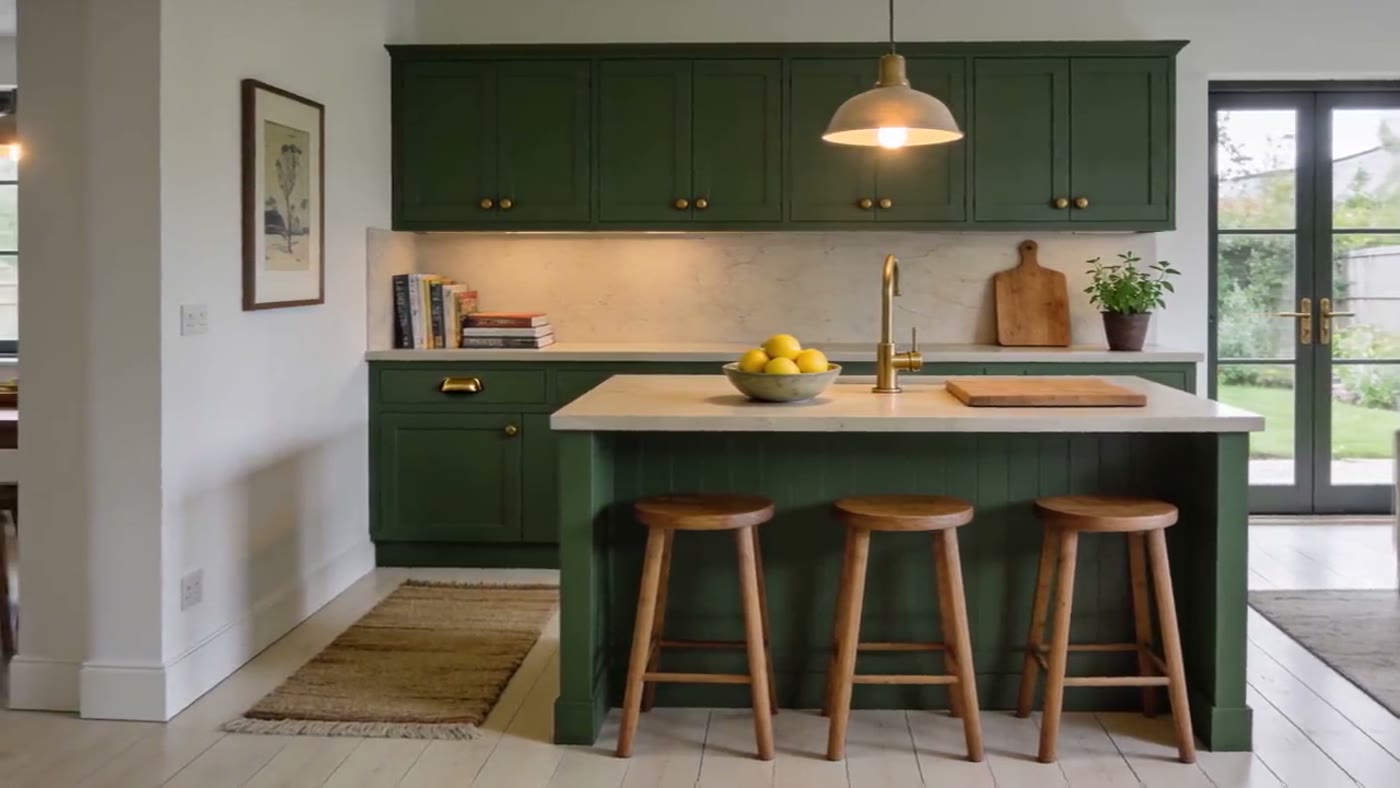
A frame from a walkthrough film, marked against the photograph it was built from. Every frame at every transition is checked this way.
- Cabinet run: 5 doors, matches
- Ceiling line: matches
- Garden doors: matches
- Island: proportions match
- Wall socket: kept
Inspected twice before you see it.
Two passes, in a fixed order. The model checks. The person decides.
The comparison model
A vision model with one job: compare every frame with the photograph it was built from and flag anything that has moved. Wall positions, window count, door placement, ceiling height, fixed fittings, proportions.
It makes nothing. It only checks. A flagged shot goes back to be made again, not patched.
A person
Every flag is reviewed by a person, and so is every shot the model passed. The film is watched at full speed and stepped frame by frame through the transitions, where generative video most often warps geometry.
The person decides. The model never publishes, and neither do we. You do.
The standard
One rule sits above everything else. The marketing must show the property as it is. Better lit, better framed, better furnished, but never bigger, never tidier than the truth, and never missing something a buyer would want to know.
Every room starts from a photograph you supplied.
No room is generated from a description. If there is no photograph of the utility room, there is no utility room in the film. This is the check that stops the model inventing space.
Each frame is compared with its source.
Wall positions. Window count and placement. Door positions. Ceiling height. Fixed fittings such as kitchen units, fireplaces, radiators and built-in storage. If the model has moved any of them, the shot is discarded and made again.
Defects stay in.
We do not remove damp, cracks, mould, staining, cabling, meter boxes, pylons, or anything else a buyer would want to know about. We will remove a bin, a car on the drive, a toy on the floor. The test is simple: if it is part of the house or affects its value, it stays.
Staging is marked on the image.
Virtually staged photographs carry a visible "Virtually staged" label. You also receive the unstaged original so the listing can show both, which is what the portals ask for.
Every film says what it is, quietly.
A small mark in the corner of every walkthrough reads "Animated from the listing photographs". It tells a buyer the rooms are real and the motion is not camera footage, which is what the disclosure needs to do. A clean master is available on request once you have confirmed the listing will carry the disclosure itself.
You approve it. We publish nothing.
You receive the finished assets, the originals, and a short QA note listing what was changed. Nothing goes to a portal, a brochure or an advert until you have said yes.
What we will and will not do
| Enhancement | Our position | Disclosed |
|---|---|---|
| Exposure, colour, lens and vertical correction | Done as standard | No label needed |
| Removing movable clutter | Done as standard | Listed in the QA note |
| Sky replacement, greening a lawn | On request | Listed in the QA note |
| Virtual staging | On request | Labelled on the image, original supplied |
| Walkthrough film from your photographs | Done, matched room by room | Corner mark, clean master on request |
| Removing damp, cracks, wiring, meter boxes, pylons | Never | — |
| Moving walls, adding windows, changing the layout | Never | — |
| Generating a room we have no photograph of | Never | — |
The mark every film carries
Your photographs, with motion added. The mark says exactly that, in the corner, and nothing more. A buyer knows it is not camera footage and knows the rooms are real.
Small, in the corner, on every film by default. With it comes one line for the listing text: “Video animated from the listing photographs. Rooms shown as photographed.” A clean master is available on request once you have confirmed in writing that the listing will carry that line.
The QA note
One page, kept with the listing file.
Which of your photographs each room was built from. Every enhancement applied. Anything removed, and why it counted as movable. Which images are staged. The on-screen mark used, and the one-line disclosure for the listing text.
If a vendor, a buyer or Trading Standards ever asks how an image was made, the answer is already written down.
The rules we work to, and why they exist, are set out on the compliance page.